Dhalion evolution through listening
At Perceptual Robotics, our product evolution has been driven less by ambition and more by listening.
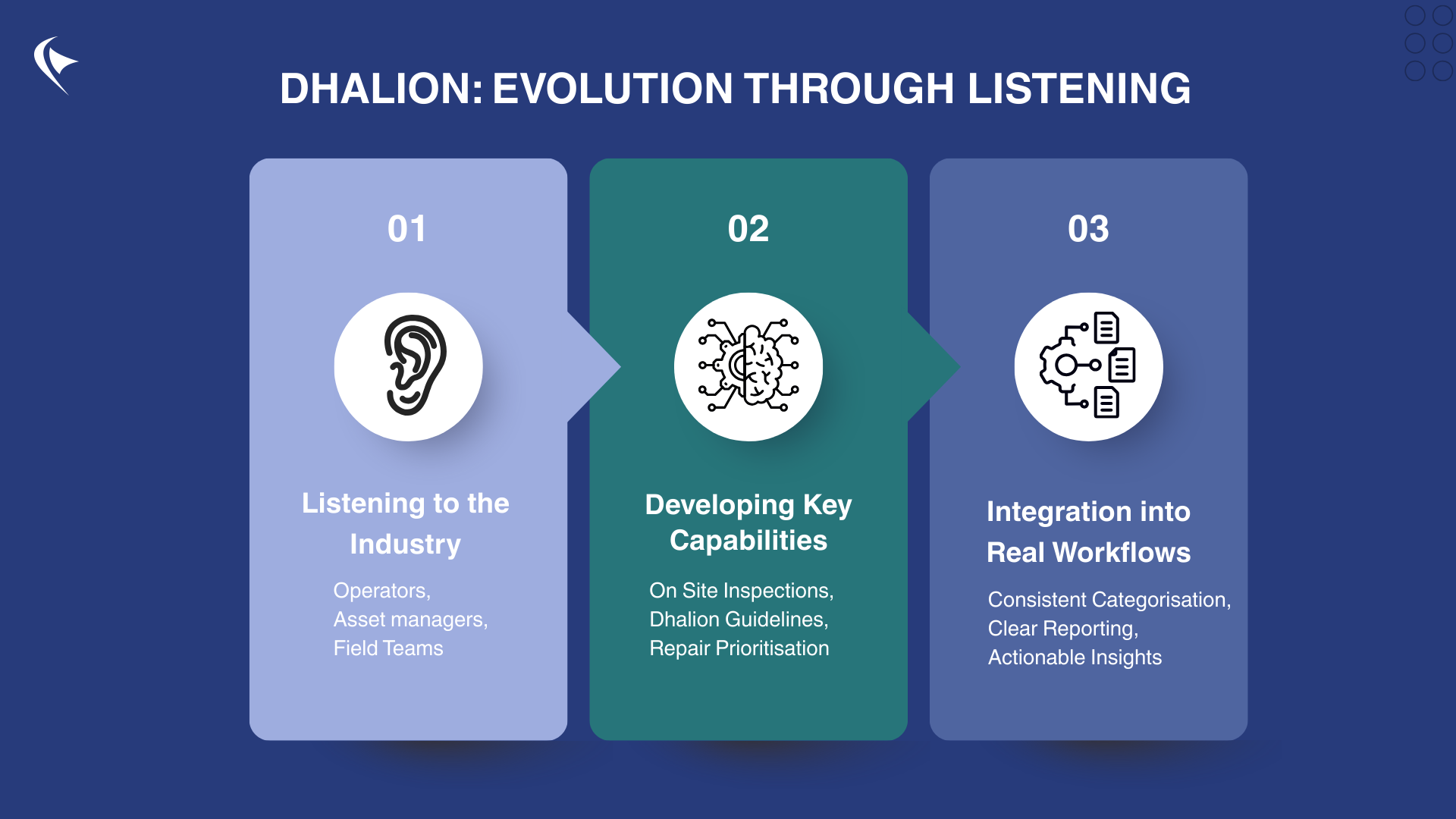
Listening to operators who need answers fast, not weeks later.
Listening to asset managers balancing inspection quality with cost, downtime, and risk.
Listening to teams who don’t want more data, but clearer decisions.
That’s what led us to focus on on-site wind turbine inspection capability, giving operators more control and reducing reliance on third-party mobilisation. It’s why we built a comprehensive classification framework, the Dhalion Guidelines for blade damages. And it’s why we introduced repair prioritisation logic, helping teams decide what needs fixing now versus what can safely wait, based on economic impact.
We’ve also learned that insight only creates value if it fits into existing workflows. Features like consistent blade damage categorisation, clear reporting structures, and actionable insights came directly from real operational constraints: weather windows in the wind farm, skills scarcity, and the pressure to do more with fewer resources and reducing friction rather than adding complexity.
Progress doesn’t always show up as big announcements. Often, it looks like quieter improvements that compound over time, shaped by a deepening understanding of the market.
That’s the journey we’re on, so join us and share your thoughts on what should be next! You can see more about our technology here
#windenergy #blades #bladerepair #droneinspection #UAV #perceptualrobotics #robotics #artificialintelligence #renewableenergy #innovation #drone #energy #offshorewind #offshorewindenergy #operations