New Case Study: How Fred.Olsen Renewables adopted Dhalion
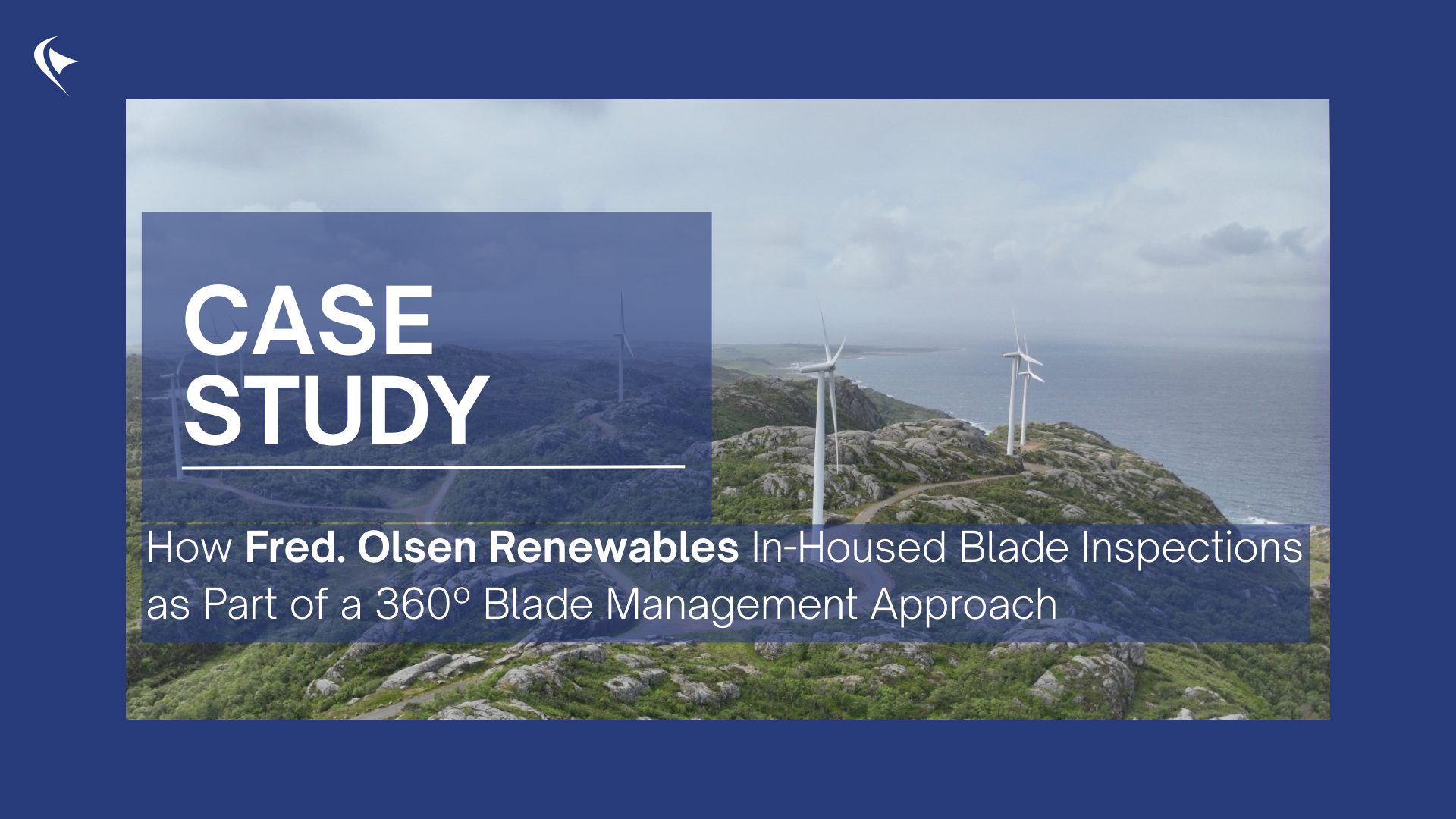
This new Case Study highlights Fred.Olsen Renewables’ 360º Approach to Blade Management and the in-housing of inspections in Scandinavia by adopting Eve Dhalion system for wind turbine blade inspections.
Fred.Olsen Renewables
Fred. Olsen Renewables is a leading developer, owner, and operator of renewable energy assets, primarily onshore wind. With 12 wind farms and 342 turbines across the UK, Norway, and Sweden, the company has an installed capacity of 804.9 MW.
Backed by a heritage of innovation dating back to 1848 Fred. Olsen Renewables combines long-term operational thinking with a strong commitment to sustainability and asset performance.
Target
By adopting Dhalion autonomous drone system, Fred. Olsen Renewables transitioned from outsourced inspections to a fully in-house inspection and repair management model in Scandinavia, gaining full data ownership, faster decision-making, and a single source of data for blade condition and repair management.
Challenges they were facing
Delayed and incomplete reporting, often limited to summary PDFs without access to raw data.
Dependency on external logistics, causing scheduling delays and lost inspection days.
Limited insight, lacking visibility into the true condition of their turbines + Repair data scattered across reports and files
The process
Fred. Olsen Renewables initially engaged Perceptual Robotics to validate data quality and workflow. Following this proof of concept, they brought inspections in-house by acquiring two Dhalion Eve systems for their teams in Sweden and Norway.
Inspections and repairs can now be managed through Perceptual Robotics’ web platform, centralising inspection data, damage tracking, and repair actions all accessible to internal teams and suppliers.
The results
Over the past two years, several severe blade cracks have been identified early through regular in-house inspections, including Category 5 crack damages.
In one case, a 30 cm crack was monitored through frequent inspection and found to increase the size considerably within one year. Early detection enabled immediate action, preventing major escalation and unplanned downtime,
In conclusion
By internalising inspections the loop between inspection, analysis, and repair has been closed.
The shift has reduced downtime, lowered costs, improved data consistency and the level of safety, and strengthened accountability -positioning Fred. Olsen Renewables not just as an operator, but as a leader in proactive, data-driven blade management.
Download the full details in our Case Studies page (link).