Scaling Inspection Capability: Why Leading Wind Owners and Operators and ISPs Are Moving to Multiple Dhalion Units
As wind portfolios grow and inspection expectations rise, one trend is becoming increasingly clear:
Forward-thinking Owners and Operators and Independent Service Providers (ISPs) are no longer relying on a single drone unit.
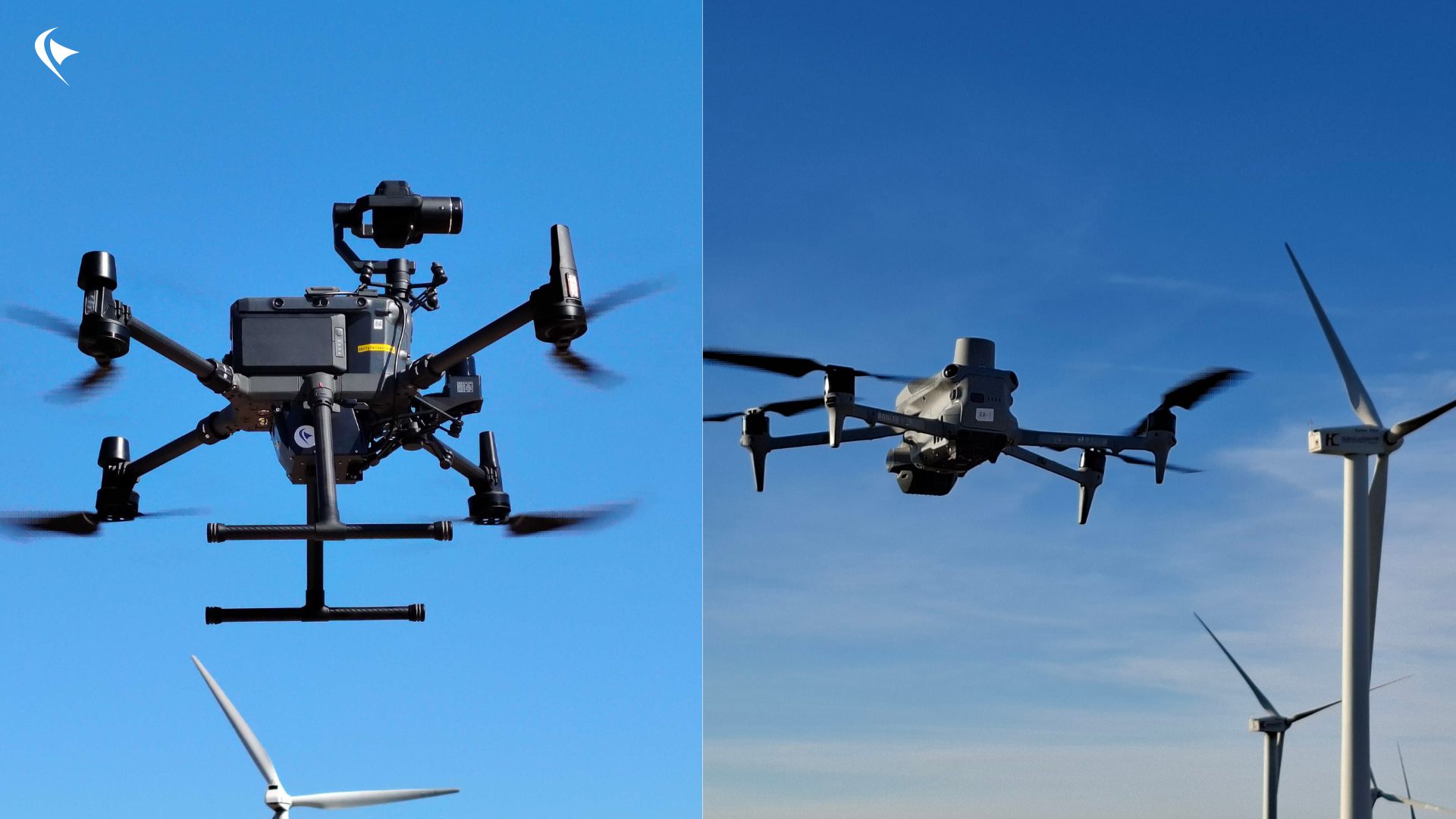
They are investing in multiple Dhalion systems, not just to increase capacity, but to gain control, consistency, and resilience across their operations.
From Outsourced to In-House And Then to Scaled Capability
Several asset owners initially began with outsourced inspections as proof of concept.
For example, one of our in-house customers, first completed 30 inspections through an external Dhalion service model. Shortly after, they brought inspections in-house and acquired one Eve Dhalion unit for their teams in the North of Europe.
Why do people move in-house?
- To empower local site managers or regional blade teams
- To ensure data consistency across the entire fleet
- To gain control and strengthen accountability with OEMs and repair providers
- To gain speed and reduce bottlenecks
The result? Faster decision-making, full access to raw and processed imagery, and improved accountability across manufacturers, operators, and repair contractors.
But once inspections are internalised, the next question becomes strategic:
Why Some Owner and Operator Clients Are Moving to More Than One Unit?
Owning a single drone system gives control.
Owning multiple units gives scale and operational resilience.
For fleet owners operating across different regions or countries, multiple Dhalion units mean:
- Inspecting assets in parallel across geographies (or even in the same one, as we did in As Somozas, 40 WTGs in two days)
- Enable local teams to take advantage of a short weather window and complete more inspections in parallel in a single site
- Have readily available drones in multiple sites for emergency inspections when required after a big storm or if your technicians notice/hear something you need to inspectMaintaining identical methodology and AI-driven classification everywhere
Consistency matters. When inspections are performed with the same hardware, same flight automation, and same AI platform, comparison across assets becomes reliable, not subjective.
For multi-country operators, having in-house drones eliminates the dependency on third-party schedules and reduces bottlenecks caused by logistics or weather windows.
One of the most transformative advantages for owners with multiple units is autonomy. A high level of responsiveness is only possible when inspection capacity is always available.
No waiting for external mobilisation.
No competing priorities.
No limited reporting formats.
Just a continuous, data-driven loop between inspection, analysis, and repair management.
Capacity Is Strategy for Independent Service Providers (ISPs)
For ISPs managing hundreds of inspections per year, scale and deliverables are not optional, they are contractual and strategic.
Take a company delivering:
- 500+ inspections per year
- 6-month campaigns across entire fleets
Now imagine responding to additional tenders covering hundreds or even thousands of turbines with strict contractual deadlines, all within the season.
A single drone system can become a bottleneck.
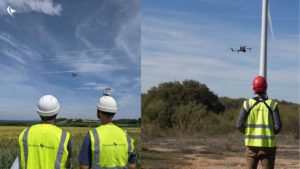
Multiple Dhalion units allow service providers to:
- Duplicate capacity instantly
- Deploy teams in parallel across different regions or in the same one, as one of our clients did in Italy
- Extend scope mid-campaign when clients unexpectedly expand requirements
- Maintain delivery even if one unit requires servicing
- Mitigate logistical risks, such as battery transport constraints between countries
Redundancy becomes a risk management strategy.
More Units, Same Standard
Importantly, adding more units does not dilute quality, it standardises it. With automated flight paths and AI-assisted damage detection, teams across different geographies can produce consistent, high-definition data sets.
This enables:
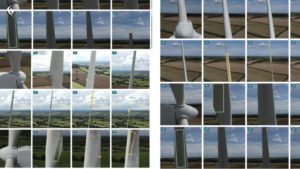
- Fleet-wide benchmarking
- Transparent reporting
- Faster inspection-to-decision cycles (as seen with up to 2× improvement in some transitions from outsourced models)
- Improved energy yield through earlier detection of erosion and structural issues
Scaling With Confidence
For asset owners, multiple Dhalion units mean control and accountability across regions.
For ISPs, they mean flexibility, competitive strength in tenders, and resilience under tight deadlines.
In both cases, the decision to expand from one unit to several is not simply about increasing inspection numbers.
It is about:
- Protecting revenue
- Reducing downtime risk
- Strengthening data ownership
- Building long-term operational independence
As fleets grow and expectations tighten, inspection capability is no longer just a technical tool.
It is a strategic asset.