
One Bad Batch, Seven Cracked Blades, and a Fleet-Wide Scramble
Not every blade failure is a surprise. Some are slow-moving and under-monitored, right up until material starts to come off.
In March 2007, at a wind farm in the USA, seven turbine blades cracked and large sections separated in mid-rotation. Every blade produced at the same plant since the previous summer, around 360 in total, had to be pulled from service and inspected. Some had already been shipped all around the USA. A later investigation pointed to a bonding defect in the manufacturing process.).
Here is the part that matters most for prevention. Cracks had already been spotted and reported in the local press weeks before the sections detached. The defect was not hidden. It was slow-moving and, across the batch, under-monitored.
A textbook propagation scenario:
🔎 An early signal: hairline cracking, likely shared across a whole manufacturing lot
📉 A detection gap: visible cracks were reported, but there was no systematic, fleet-wide tracking of how fast they were growing
⚠️ The outcome: a reactive shutdown of an entire product line, after material had already been ejected
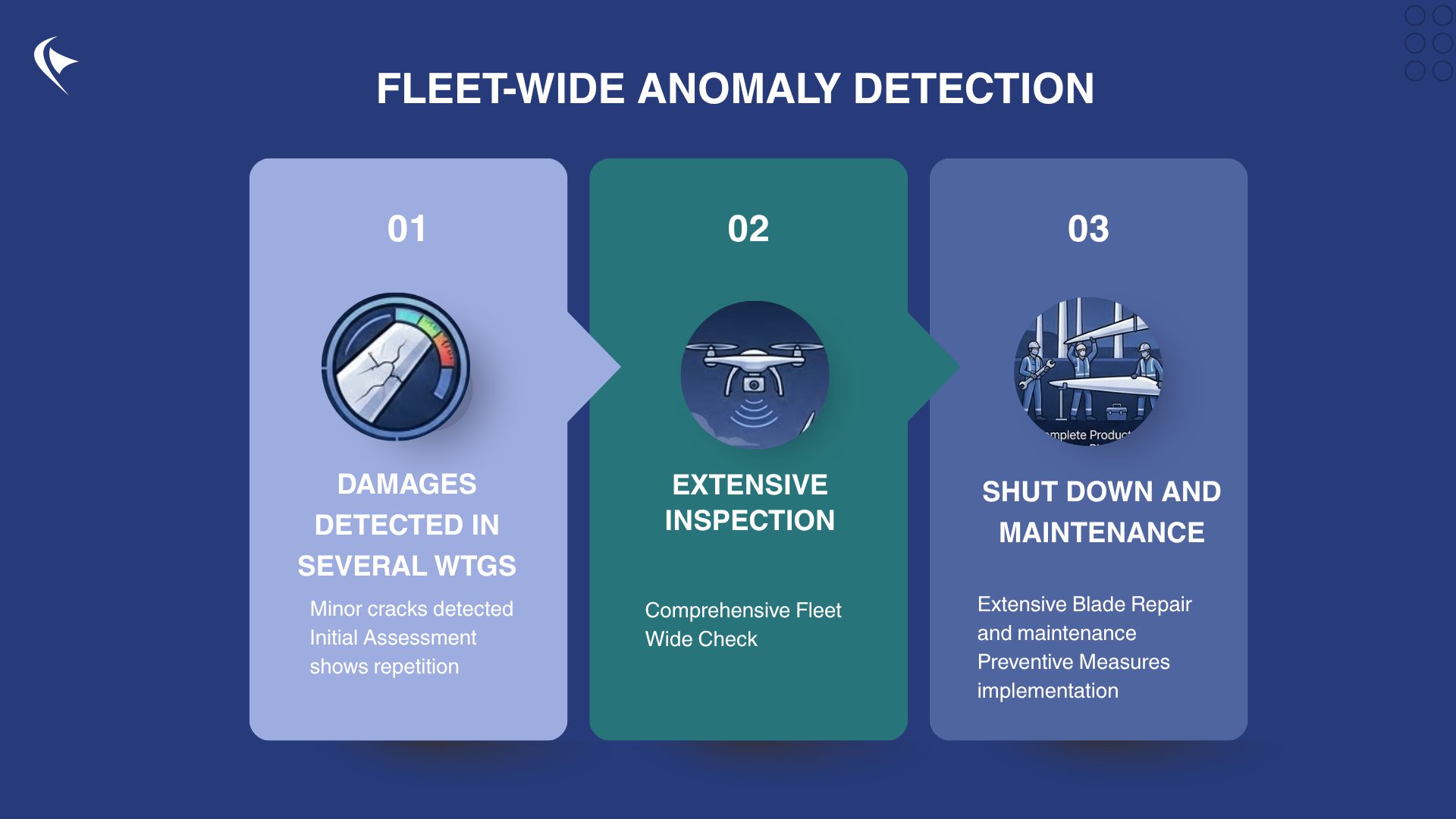
This is one of the clearest cases for AI-assisted, fleet-wide inspection. With scheduled drone inspections and a model trained to flag and track bonding defects and delamination across sister turbines, not just one unit, a defect shared across a batch can be caught at the first-crack stage rather than after several blades have shed material. Spotting that several sister units share the same defect signature is exactly what fleet-wide anomaly detection is designed to do. And carrying out spot inspections with a resident drone allows tracking progress.
The technology to catch this exists today. In 2007, it did not. That gap is the opportunity in front of the industry now.