
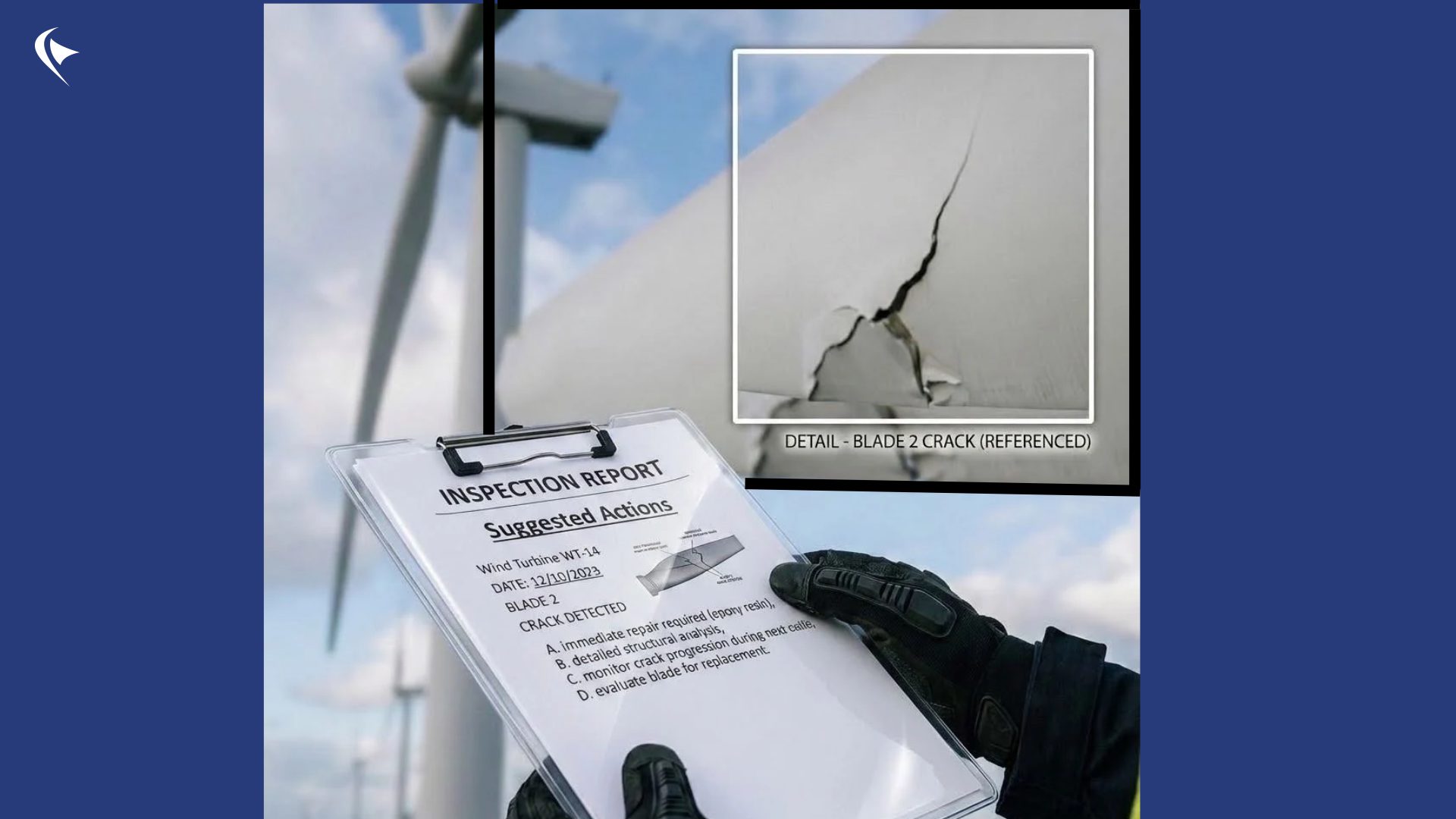
They knew about the defect. They ignored it.
Not every blade failure is a surprise. Some are a documented risk that nobody acted on in time.
24 years ago, a wind turbine in Germany lost a blade during a storm. What makes this case worth studying isn’t the storm, it’s what came out afterward: the operator admitted there had been a known defect in the blade before the storm hit, and it had been ignored.
That single sentence in the incident record is, in miniature, the entire case for predictive blade maintenance:
- A defect existed and was known.
- No system tracked how it was evolving.
- An external load (wind) turned a manageable flaw into a full blade loss.
This is exactly the failure mode that routine drone inspection paired with AI-based damage detection was built to close. A defect flagged once isn’t always useful on its own; what matters is comparing scans over time, quantifying crack or delamination growth rate, and forecasting the load threshold at which that specific defect becomes critical. That turns “known but ignored” into “known, tracked, and scheduled for repair before the next storm season.”
The technology to catch this exists today and it is inexpensive compared to the gains. In 2002, it didn’t yet. The gap between those two facts is the opportunity in front of the industry now.